Dubrovnik earns its reputation the hard way. The marble of the Stradun — the main street that runs the full length of the old town — has been polished smooth by centuries of feet, and the shine on the limestone under a midday sun is almost blinding. You notice that when you arrive on foot through the Pile Gate: the gate channels you through a deep stone arch, the narrow vault drops the noise for a moment, and then you emerge into one of the most photographed streets in Europe. After that, everything depends on when you arrived and how much of the crowd you walked into.
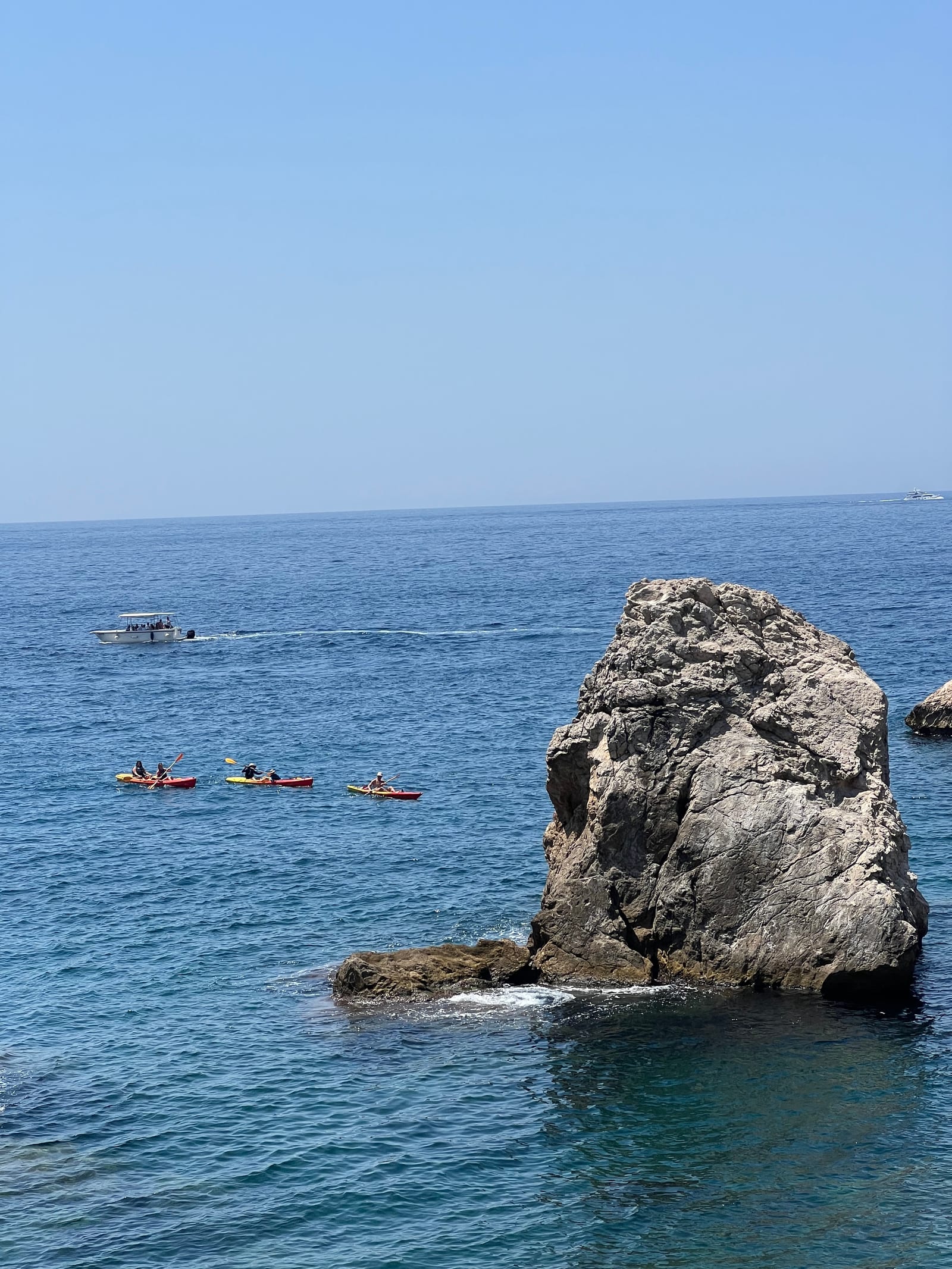
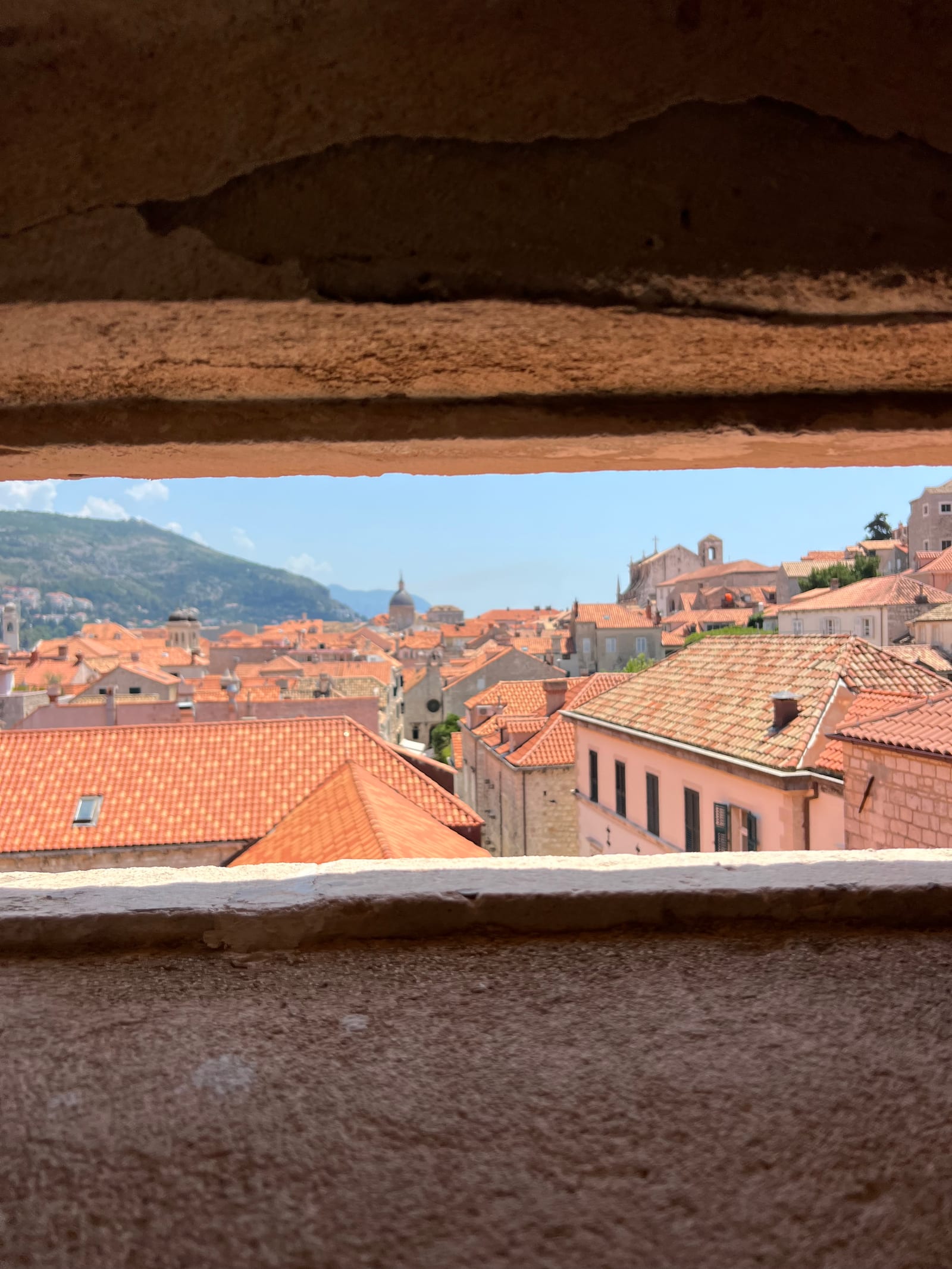
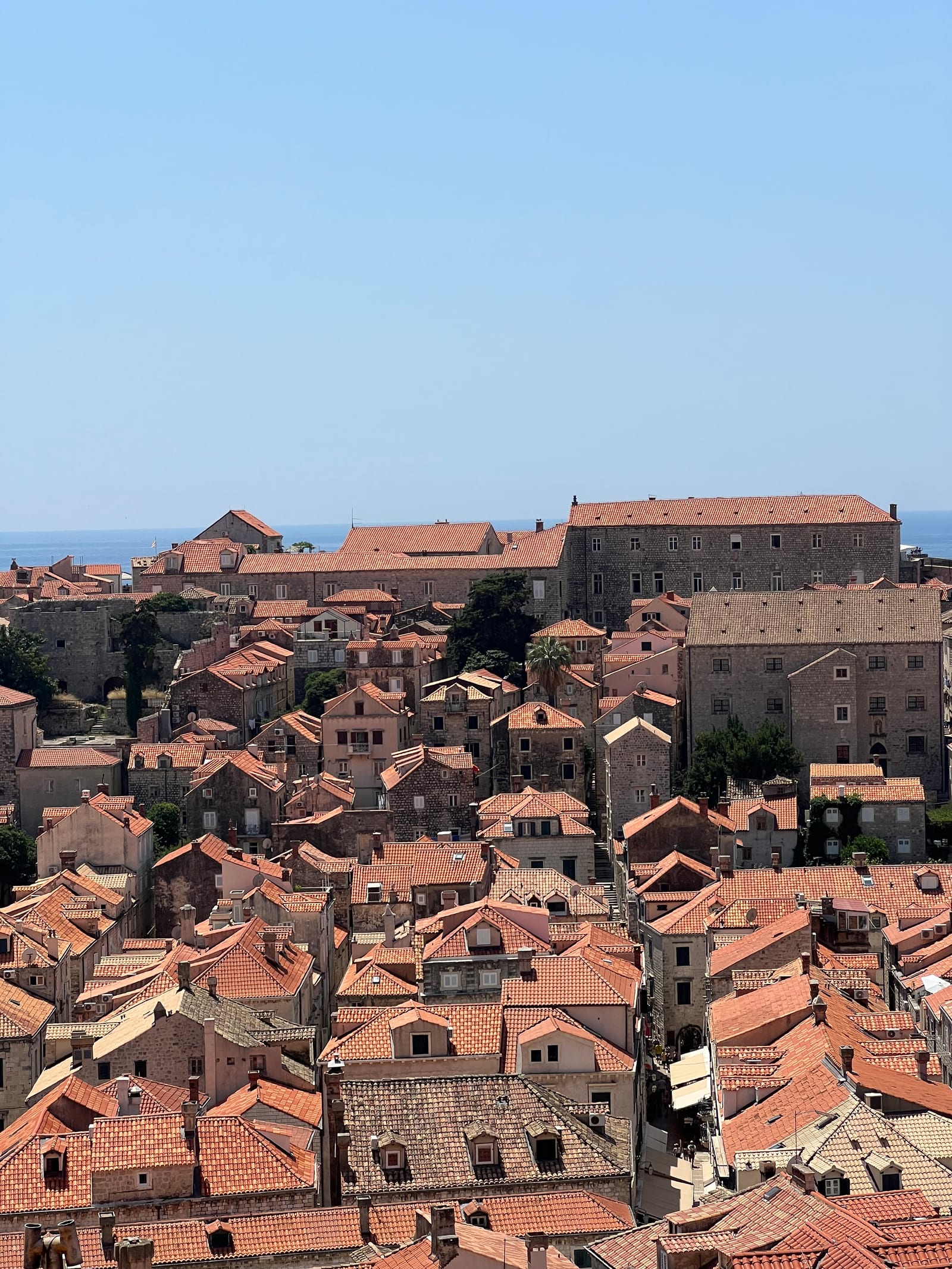
The walking character of Dubrovnik is defined by three elements operating at different scales. At street level: the Stradun itself, wide and relatively flat, flanked by Baroque buildings that were rebuilt after the 1667 earthquake in a deliberate, uniform style. Behind the main street, narrow side alleys climb steeply on both sides — stone staircases, shuttered windows, washing lines — and many of them are steep enough to slow you down. At the perimeter: the famous walls, a near-complete circuit of roughly two kilometres running along the top of the fortifications, with views down into the old town on one side and out over the Adriatic and the island of Lokrum on the other. Above everything: Mount Srđ, the 412-metre ridge that rises directly behind the city, accessible by cable car in four minutes or by a long, exposed hike that has no shade and rewards you with a view that reframes everything you saw from the walls.
Terrain. The Stradun is genuinely flat and wide enough for strollers. The walls are a different matter: the circuit involves constant stair-climbing, narrow parapet sections, and exposed baked stone with no shade in summer. Side streets in the old town are steep in places and demand decent footwear. The Mt Srđ hike — via the Serpentine path — is a serious climb of roughly an hour, steep throughout, and brutally exposed on a hot day.
When to come. July and August are the most complex months in Dubrovnik's history. Cruise ship arrivals can push more than ten thousand passengers into the old town on a single morning; the Stradun by 11am becomes a slow-moving stream. The city has introduced crowd-management measures and cruise ship caps in recent years, but peak summer is still overwhelming if you arrive mid-morning. Shoulder season — late April through June, and September through October — gives you temperate weather, manageable crowds, and the golden-hour light on the walls that makes Dubrovnik genuinely beautiful rather than just famous. Spring and autumn are the locals' own answer when you ask them directly.
Getting here. Dubrovnik Airport sits roughly 20 kilometres south of the old town; a bus runs to the Pile Gate terminus. From the cruise port at Gruž, it is about three kilometres — local bus service runs the route regularly, or taxis are readily available. The Pile Gate, where all four walking routes in this section begin, is the western entrance to the old town and the natural orientation point: this is where you arrive, where the city's walking logic starts, and where the walls, the old town loop, the GoT walk, and the route to Srđ all begin.
What separates Dubrovnik from other Adriatic walking cities. Split has Diocletian's Palace dissolved into living city fabric; Kotor has the compressed medieval warren and the mountain fortress rising behind it. Dubrovnik has the walls. The two-kilometre wall circuit is not a viewing platform bolted onto a fortification — it is the actual fortification, and walking it gives you the spatial logic of the old town in a way that an hour on the Stradun cannot. The Game of Thrones layer adds a second vocabulary on top of the historical one: the same gates, walls, and stairways that served as King's Landing backdrops for most of the show's run are also genuinely medieval, genuinely interesting, and genuinely worth understanding on their own terms before you start thinking about which scene was filmed where.
Four routes cover the main walking character of the city: the two-kilometre walls loop for the elevated view, the ground-level old town self-guided walk from Pile Gate to Ploče Gate, the Game of Thrones filming locations walk for visitors who want the on-screen geography mapped onto the real city, and the route up to Mount Srđ for the panorama that makes everything else make sense.