Kotor

St. John Fortress Hike — Kotor City Walls Climb

The route at a glance

  1. 1 Ticket booth — north entrance start — near the North Gate (Vrata od Škurde), inside the old town
  2. 2 First bastion — city view opens 15 min climb from ticket booth
  3. 3 Ladder of Kotor — the zigzag section 10 min above the first bastion
  4. 4 Church of Our Lady of Remedy (Crkva Gospe od Zdravlja) Roughly halfway up — approximately 45 min from the base
  5. 5 Upper bastions — the final push 20 min above the church
  6. 6 St. John Fortress — summit (Tvrđava Sv. Ivana) 1–1.5 h from base depending on pace
  7. 7 Summit viewpoint — flag terrace Within the fortress enclosure
  8. 8 Descent — return via north entrance 45–60 min back down from summit

The view you can't see from the old town

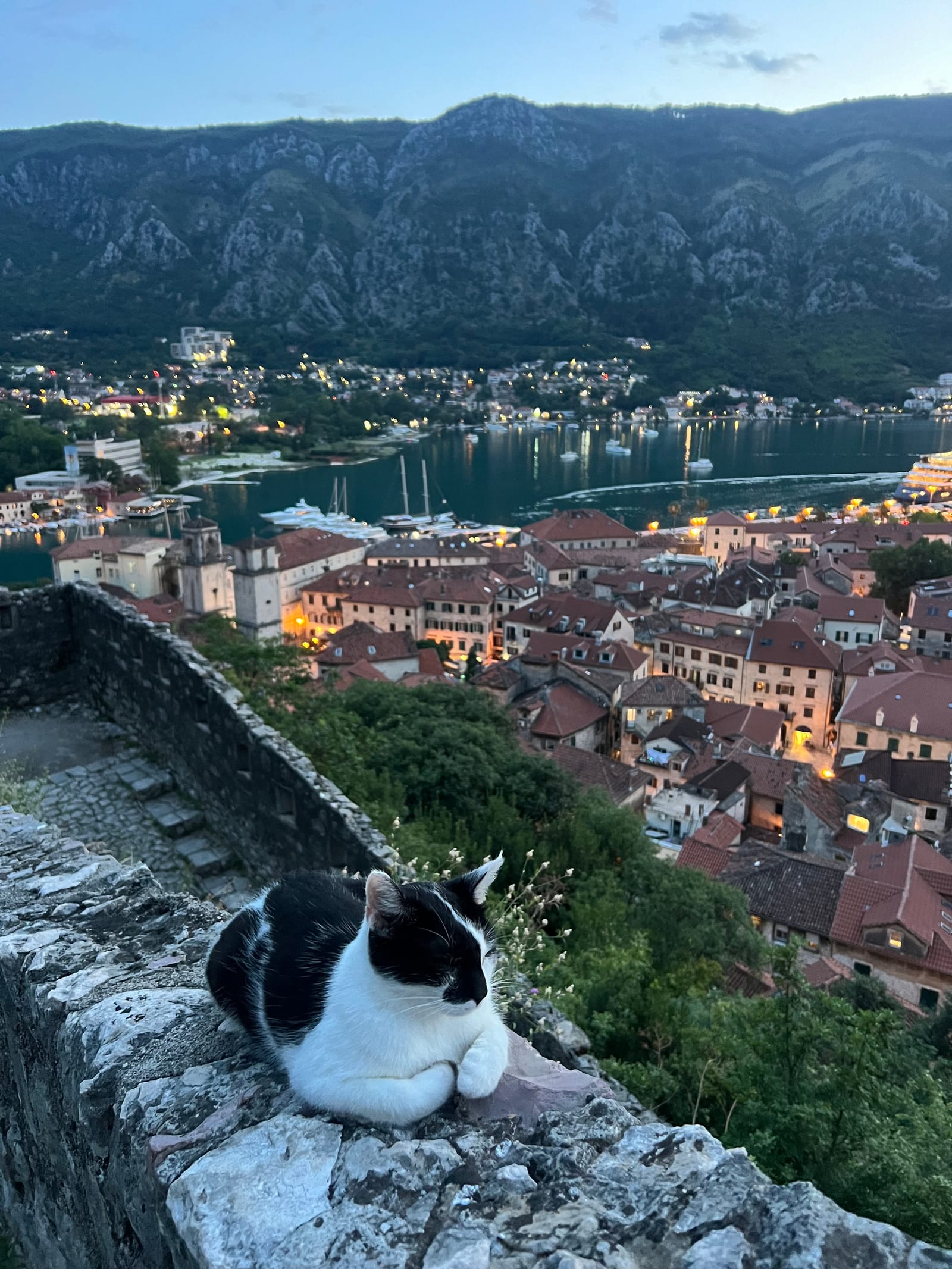
Every photograph of Kotor that makes you want to go there was taken from above — from the city walls, from the fortress, from the slope of the mountain. The old town is beautiful from the inside, but you cannot see it from the inside. The famous image — the compact walled city pressed between the bay and the cliff, the fortifications climbing the bare limestone — requires elevation. And elevation requires the climb.

The city walls of Kotor rise from the old town gates to the summit of St. John Fortress at around 260 metres, via approximately 1,350 ancient stone steps. The full system is 4.5 kilometres of walls, bastions, and towers, built and rebuilt under successive rulers — Byzantine, Serbian, Venetian, French, and briefly British — from the 9th century through to the early 19th. The Venetians oversaw the most significant phase of construction: the Sea Gate was set in 1555, the North Gate followed earlier in 1540, and the Church of Our Lady of Remedy was completed in 1518, all as part of the sustained Venetian effort to hold the inner bay against Ottoman pressure.

What you are climbing is not a hiking trail with a fortress at the top. It is the actual fortification: the walls, bastions, and stairways that the garrison troops used for six centuries. The condition of the steps reflects that history — uneven, worn to a polish in places, cut directly into the cliff face in others. The reward is proportional to the effort.

Two and a half hours is the right budget: one to one and a half hours up, stopping at the Church of Our Lady of Remedy and the bastions along the way, thirty to forty-five minutes at the summit, and an hour back down. That is the real pace for people who are not in a race. Fit walkers in good shoes on a spring morning can do the ascent in forty-five minutes; in July at noon, the same route can take two.

The ticket booth is near the North Gate entrance, inside the old town. Bring water. Wear shoes with grip. Start early.

start — near the North Gate (Vrata od Škurde), inside the old town

Ticket booth — north entrance

The main entrance to the walls is found in the north-east corner of the old town, a short walk from the North Gate and from Pjaca od Salate. A second entry point exists near the south (Gurdic Gate) — both lead to the same climb, and both require a ticket.

Buy your ticket here before starting. Check the time: the gate closes at 20:00 and the descent in darkness is not something you want to attempt on unlit ancient steps. The route ahead is marked throughout — orange arrows on the stone guide you upward at the decision points.

Take a moment at the bottom to look at what you're walking into. The walls directly above are visible from the square below — stepped bastions climbing the cliff face, narrowing as they rise. The mountain behind them reaches 260 metres to the summit. That is where you are going.
15 min climb from ticket booth

First bastion — city view opens

The first significant terrace on the route gives you your first clear view back over the old town below. From here you can see the full layout of the walled city — the Cathedral of St. Tryphon, the twin towers of St. Nicholas, the Square of Arms, and the Sea Gate opening onto the cruise quay — compressed into a remarkably small footprint, the fortification walls running around it in all directions.

The bay is visible too: the first wide reach of the Kotorski zaljev, with the Verige strait — the narrowest point, barely 340 metres across — visible in the distance where the water bends behind the hills. Across the water, the village of Muo is directly opposite.

Rest here for a moment. The steps become steeper above this point, and the path narrows. The first section is genuinely the most accessible part of the climb; pace yourself before committing to the upper route.

Early on the climb — walls above, bay below

10 min above the first bastion

Ladder of Kotor — the zigzag section

The section the locals call the "ladder" is the exposed zigzag traverse cut directly into the mountain face. The path is a series of sharp switchbacks with a near-vertical drop on one side. This is where the walls stop following the ground and start following the cliff itself — the builders in the medieval period had no easier option.

The steps here are among the oldest on the route and the most irregular: different heights, different widths, occasionally angled toward the drop. The surface is worn smooth by centuries of use. Grip soles are not optional here — they are load-bearing.

Look up as you climb through this section. The walls run almost vertically above you, the same pale limestone as the mountain. In places it is genuinely difficult to tell where the fortification ends and the natural rock face begins.

Roughly halfway up — approximately 45 min from the base

Church of Our Lady of Remedy (Crkva Gospe od Zdravlja)

You will hear it before you see it: the small bell turret appears above a flat terrace with just enough room for a dozen people to rest. The Church of Our Lady of Remedy (Crkva Gospe od Zdravlja) was built in 1518, during the period of Venetian rule, inside the fortification network on the slope of the mountain. It is a Roman Catholic church dedicated to the Virgin Mary, built on a site where archaeological work has uncovered evidence of an early Christian structure dating back to the 6th century — making the ground beneath it the oldest known ecclesiastical site in Montenegro.

The church is small, single-nave, built in the same limestone as the walls. Its main function in the 16th century was as a waypoint and place of rest for the garrison troops who patrolled this section of the fortifications. The view from the terrace in front of it — roughly two-thirds of the way up in terms of elevation gain — gives the best mid-route panorama of the bay: the old town directly below, the bay stretching west, the Adriatic visible in the distance on a clear day.

Rest here, drink water, and look at what you've climbed. The summit is still above you, but the hardest structural section is mostly done.

Mid-climb, walls tightening
Upper section — the bay opens

Halfway and above

20 min above the church

Upper bastions — the final push

Above the Church of Our Lady of Remedy the path narrows again and the bastions become more exposed. The walls here are military architecture at its most serious: thick, minimal, built to withstand siege cannon rather than to impress visitors. Several small embrasures — firing apertures cut through the stone — still face down toward the bay.

The upper section also has the fewest handholds. In places the steps are cut into near-vertical rock faces with an unguarded drop to one side. Take it steadily and stay on the marked path. The orange arrows are your guide through the confusing sections — do not improvise a shortcut.

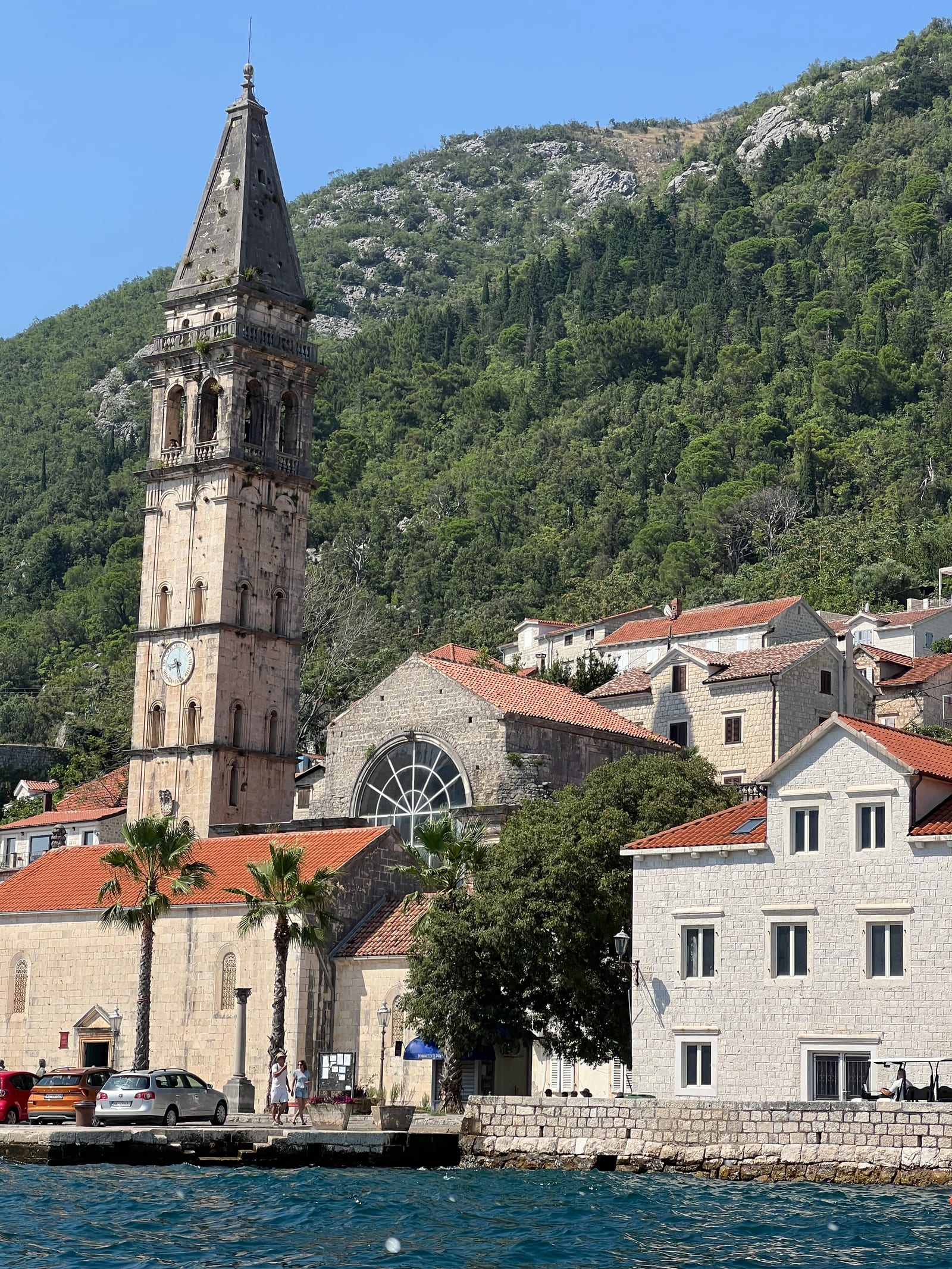
As you climb, the scale of the bay becomes clearer. The inner arm of the bay — Boka Kotorska proper — is visible in its entirety from this height, with Perast and the islet churches visible in the far distance on a clear day.

1–1.5 h from base depending on pace

St. John Fortress — summit (Tvrđava Sv. Ivana)

The fortress at the summit occupies a roughly rectangular enclosure at around 260 metres above sea level. What remains is the shell of the medieval fortification: thick walls, several vaulted storage rooms, and an open upper platform. San Giovanni — the Italian name under which it appears on old Venetian charts — was the command post for the entire wall system, the highest defensible point in the chain of bastions that runs from the sea gate at water level to this summit.

From the upper platform, the full extent of the bay becomes visible in a way that is impossible from any lower point. The Bay of Kotor, all 28 kilometres of it, curves away to the west through successive narrows. Directly below: the old town, its walls, its rooftops. Across the water: Muo, Prčanj, the coastal road heading toward Tivat. On a clear day, the Adriatic Sea is visible beyond the mouth of the outer bay.

Take time here. This is the payoff for 1,350 steps.

Summit fortress, looking west
From the top
From the top

At the summit

Within the fortress enclosure

Summit viewpoint — flag terrace

The highest accessible point of the fortress — a flat open terrace where a Montenegrin flag typically flies — gives a three-sixty view that the walled platform itself does not. From here you can see both sides of the mountain simultaneously: the bay to the west and south, and the Lovćen massif rising steeply to the east and north. The road to the Lovćen cable car (opened in 2024, connecting to Lovćen National Park in eleven minutes) is visible cutting up the hillside below the ridge.

This terrace is the natural place to eat, drink water, and photograph. It is not crowded even in high season — the 1,350 steps are a reliable filter. The number of people at the summit is always a fraction of the number in the Square of Arms below.

When you're ready, return the way you came. The descent takes slightly less time than the ascent but is harder on the knees — slow down through the steeper zigzag sections.

45–60 min back down from summit

Descent — return via north entrance

The same route down is the standard return. Take it steadily: the steps that required grip on the way up are just as slippery on the descent, particularly if the afternoon sun has heated the upper stone and created a slight shimmer on the smooth sections.

Knees feel the descent more than the ascent — if your knees are sensitive, pace the downhill sections deliberately. The zigzag traverse is the most technically demanding part in both directions.

Back at the base, the North Gate is a few minutes' walk into the old town. Pjaca od Salate is the nearest quiet square for sitting down, and the cafe terrace there is reliably good for the post-climb coffee. If you still have energy, the old town self-guided loop starts from the same square.

Practical tips

Frequently asked questions

How many steps are there on the Kotor fortress climb?

Approximately 1,350 steps from the old town entrance to the summit of St. John Fortress. The number varies slightly depending on which count you use — some sources cite a few more or fewer — but 1,350 is the widely accepted figure. The steps are ancient stone, irregular in height and width, and noticeably steeper in the upper third.

How long does it take to climb to St. John Fortress?

Between 30 minutes and 1 hour to reach the summit without stopping, depending on fitness. Most visitors with stops at the Church of Our Lady of Remedy and the upper bastions take 1.5 to 2 hours to reach the top. Allow 2.5 to 3 hours for the full round trip including time at the summit.

How hard is the Kotor walls climb?

Moderate to hard. The elevation gain of around 260 metres over approximately 1.2 kilometres is steep by any measure, and the steps are genuinely demanding — many are ankle-height and uneven. It is not a hike in the conventional sense; it is a sustained stair climb on ancient stone with limited rest sections. Fit walkers handle it easily; anyone with knee issues should consider carefully.

Can children do the St. John Fortress climb?

Older children (roughly 8 and above) who are comfortable with sustained physical effort can manage the climb with adults. The main concerns are the exposed sections in the upper part of the route where the path narrows against the mountain face, and the heat in summer. Very young children and strollers are not suitable — there is no alternative path and the steps are too irregular.

Is there an entry fee for the Kotor city walls?

Yes. A ticket is required to access the walls from the old town entrances. The fee has been approximately €8 in recent seasons — check the current rate at the ticket booth on the day, as it has increased over the years. There is a free alternative trail accessible from outside the old town near the north gate, but it is unmarked and not the same route.

What are the opening hours for the Kotor city walls?

Ticket gates open in the morning and close at 20:00. Do not begin the climb late in the afternoon unless you are confident you can complete the descent before dusk — the steps are unlit and difficult in poor light.

What is the best time of day to climb?

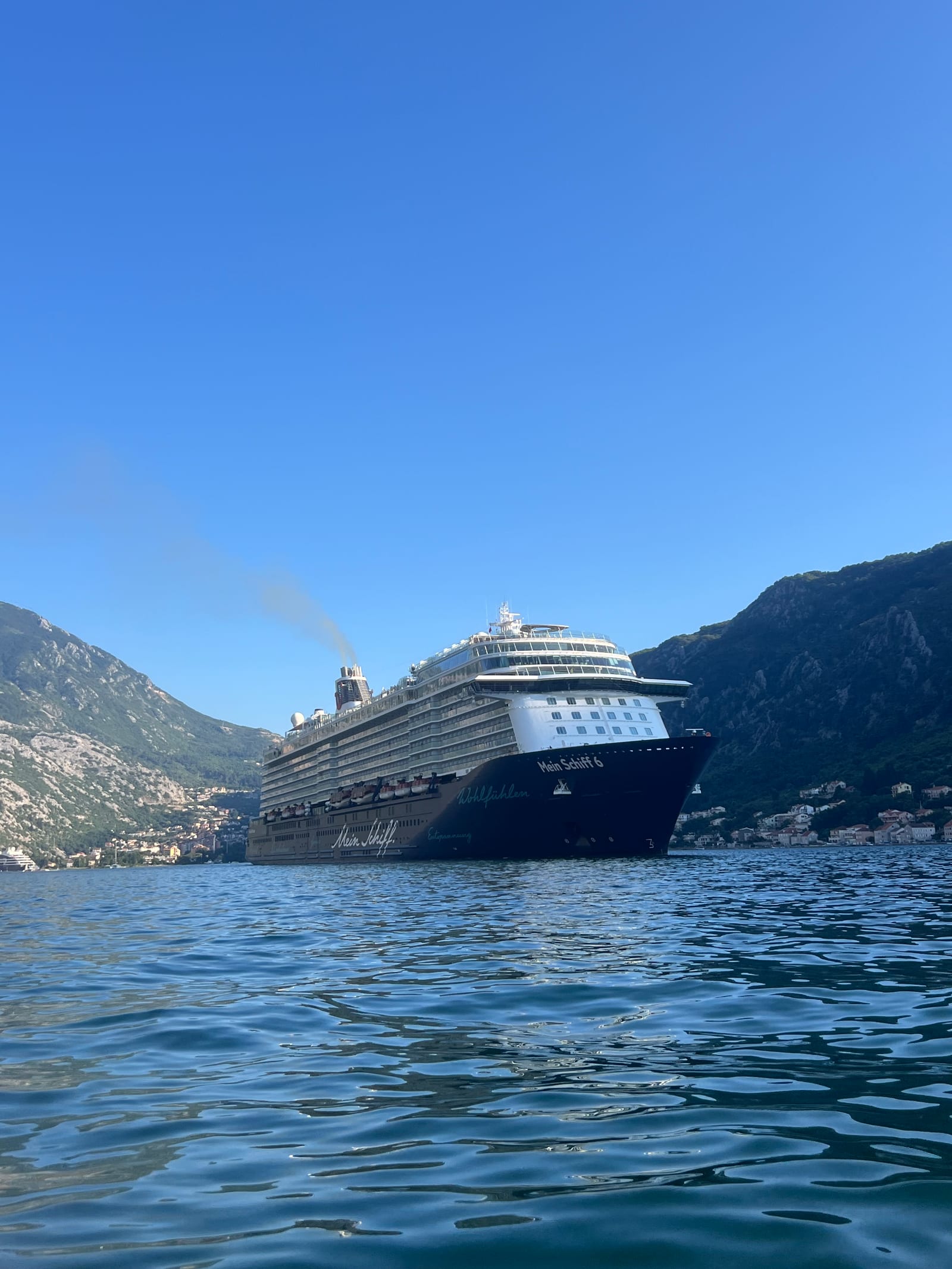
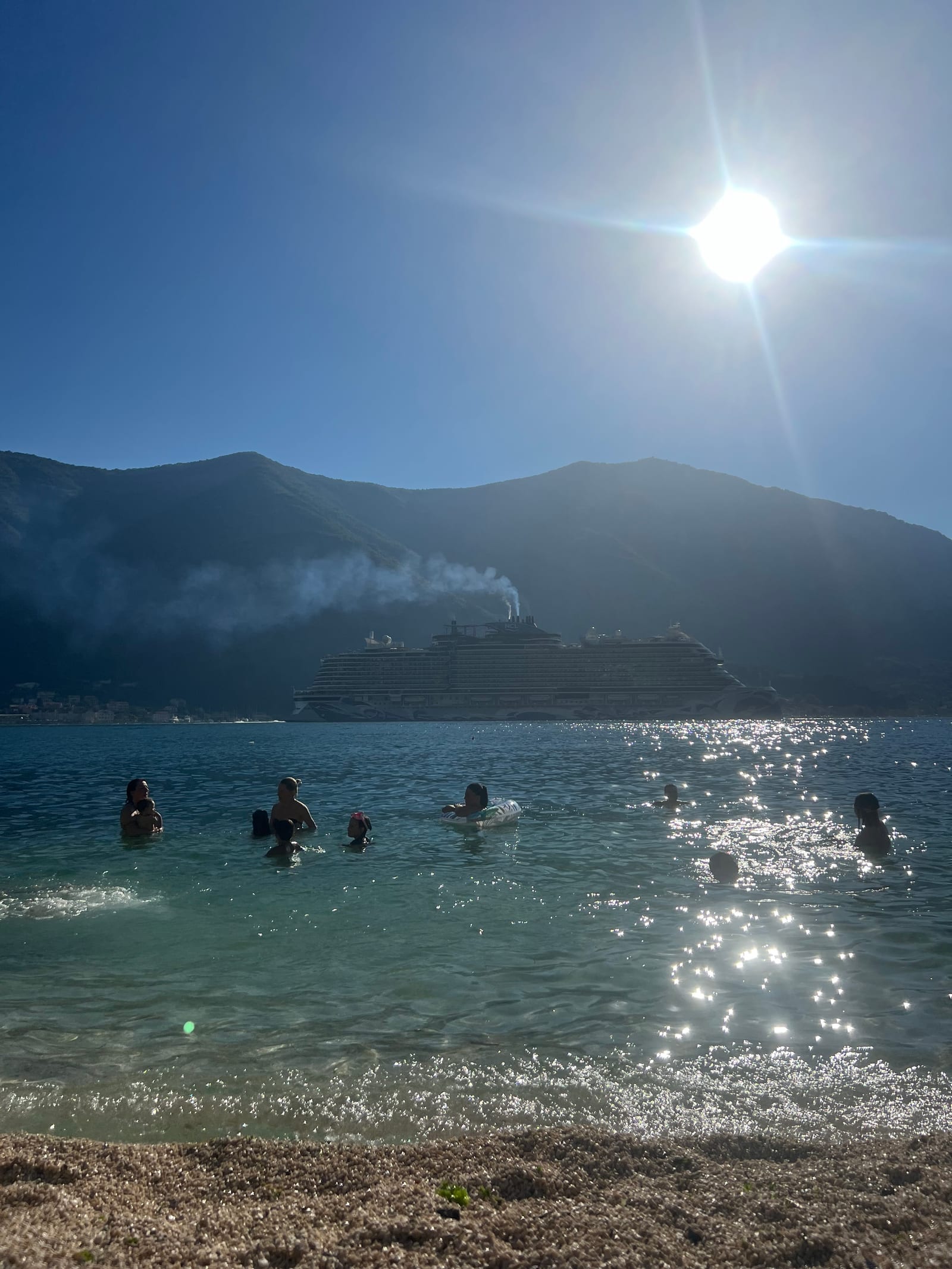
Early morning, before cruise ships arrive and before the sun hits the upper walls. In high summer, that means before 8am. In spring and autumn, mid-morning is fine. Late afternoon (after 4pm) is the second-best option — the light is excellent for photography and the crowd thins significantly.

Do I need to bring water?

Yes, and more than you think. Carry at least 1 litre per person; 1.5 in summer. There are no water fountains or vendors on the route once you pass the old town. Running out of water on the upper section in July is a genuine problem.

Walk it with confidence

Walk it with confidence

Get turn-by-turn directions, offline maps, and audio guidance — plus 50+ more curated routes across Europe.